
Beta-carotene colour
COLOUR OPTION
WHAT IT IS
Beta-carotene is a carotenoid pigment used to give foods yellow-to-orange colour. Its name identifies the colouring compound, while the complete preparation depends on the selected supplier.
WHY IT'S HERE
Beta-carotene gives foods and drinks a yellow-to-orange hue, helping create a brighter, more inviting appearance. At the small, unspecified colouring amount, its relevant benefit is visual rather than an established vitamin A contribution.
THE SHORT VERSION
Adds a warm yellow-orange hue that complements bright fruit flavours.
From the current OVERT ingredient guide. Ingredient reference information; check the current product label for inclusion, amounts, directions and warnings. Research on an ingredient does not establish the effects of a finished OVERT formula.
Read the original guide and references ↗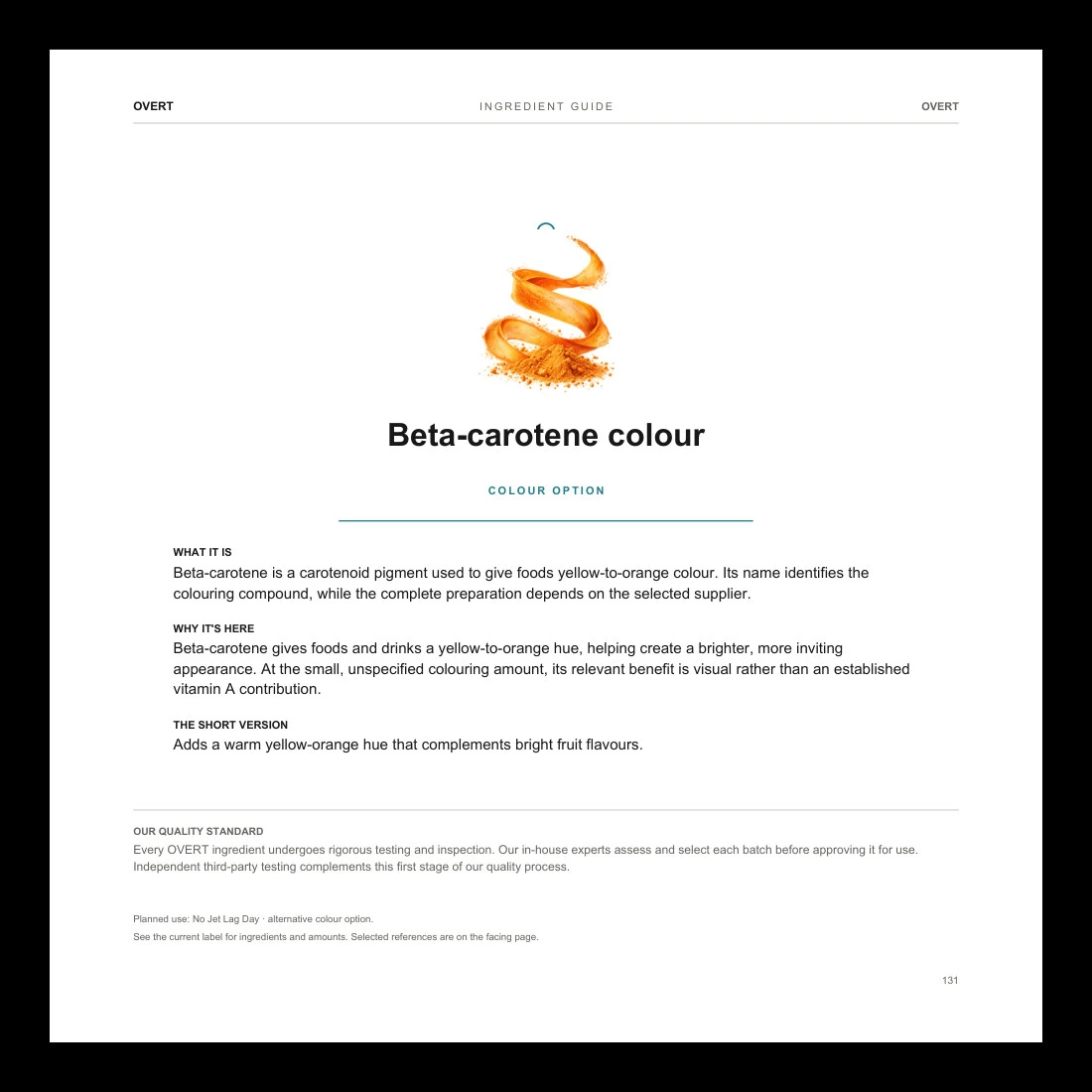
Research context and selected references
OFFICIAL COLOUR-INGREDIENT IDENTITY SPECIFICATION
U.S. Food and Drug Administration. Beta-carotene, 21 CFR 73.95. eCFR.Describes beta-carotene colour and food-use conditions. It supports the pigment's identity and visual role, without identifying the supplier's carrier system, confirming an active pigment dose or making a nutritional or medical claim for the finished serving.
Read publication ↗ (Official source: eCFR section 73.95)
PRIMARY RANDOMIZED HIGH-DOSE SAFETY TRIAL; INDIRECT RELEVANCE
Alpha-Tocopherol, Beta Carotene Cancer Prevention Study Group. The effect of vitamin E and beta carotene on the incidence of lung cancer and other cancers in male smokers. New England Journal of Medicine. 1994;330(15):1029-1035.Among 29,133 male smokers, 20 mg beta-carotene daily for five to eight years increased lung-cancer incidence. This high-dose, long-duration population-specific finding is important safety context, but was not a test of the amount in a colour preparation.